
Introduction
Puppy biting is one of the most common concerns new owners bring to us, and for good reason. Those tiny teeth are sharp, and it is not always easy to tell the difference between normal puppy biting and something more serious. Most puppy biting is normal developmental behavior. The challenge is recognizing when the pattern suggests fear, pain, guarding, or another concern requiring a different response.
This guide covers what Lehigh Valley dog owners need to know about distinguishing normal puppy mouthing from potentially aggressive behavior, including the body-language cues that separate playful biting from warning signs, the contextual triggers behind concerning biting, and the appropriate response for each situation. Whether you’re a first-time puppy owner or you’ve raised dogs before and something feels different this time, this resource is built for you.
Most puppy biting is associated with teething, exploration, excitement, or play rather than an intent to cause harm. More concerning biting may occur with fear, pain, resource guarding, frustration, or handling sensitivity and may be accompanied by a stiff or frozen posture, hard stare, lip lifting, or attempts to escape. No single signal confirms aggression, so consider the puppy’s entire body, the trigger, bite intensity, and what happens before and after the incident.
By the end of this guide, you’ll be able to:
- Identify whether your puppy’s biting falls within normal developmental behavior or signals a more serious concern
- Understand the body language and contextual triggers that separate play biting from concerning biting
- Implement an appropriate response based on the behavior your puppy displays
- Recognize when it is time to seek veterinary or professional help
- Apply prevention strategies, especially early socialization, to support safer behavior
Understanding Normal Puppy Biting Behavior
Normal puppy biting, also called mouthing or nipping, is a natural part of how puppies explore their world, communicate, and develop social skills. Puppies use their mouths to investigate textures, interact with their environment, and engage in play. Normal puppy biting is part of their development and is far more common than truly aggressive puppy biting.
Puppies commonly bite and mouth during teething, exploration, excitement, and play. Teething may increase chewing and mouthing as puppy teeth are replaced by adult teeth, often between approximately 3 and 6 months. Interactions with the mother and littermates may also contribute to early bite inhibition because play can pause when one puppy bites too forcefully. Owners must continue teaching gentle interaction through appropriate play, redirection, management, and reinforcement.
Developmental Stages of Puppy Biting
Between approximately 8 and 12 weeks, many puppies become increasingly active and use their mouths during exploration and play. Mouthing at this age is commonly developmental, but owners should still consider context, body language, pain, fear, and handling sensitivity. Puppies generally benefit from appropriate early time with their mother and littermates, although later behavior is also influenced by genetics, health, socialization, environment, and experiences after adoption.
The teething phase commonly occurs between approximately 3 and 6 months, although timing varies. Some puppies mouth and chew more during this period as adult teeth erupt and their gums become uncomfortable. Increased mouthing does not automatically indicate aggression, but sudden or severe changes, mouth pain, difficulty eating, bleeding, or damaged teeth should be discussed with a veterinarian. Provide appropriately sized puppy-safe chew toys and supervised chilled enrichment while avoiding objects hard enough to damage teeth.
Normal Play Biting Characteristics
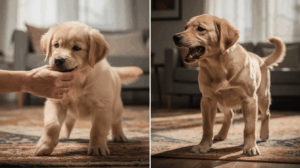
A puppy engaged in play biting often displays loose, bouncy body language, play bows, an open mouth, and exaggerated movements. The interaction may include pauses, role reversals, and repeated invitations to continue playing. A wagging tail alone does not prove friendliness, and playful bites can still hurt because puppy teeth are sharp. Evaluate the puppy’s entire body, the surrounding context, and whether the puppy can pause or disengage.
The critical distinction between normal puppy play and concerning behavior lies not only in whether biting occurs, but also in how the puppy’s body looks before, during, and after the bite. Understanding this body language helps you distinguish common mouthing from behavior that warrants a more careful response.
Identifying Aggressive Biting in Puppies
Where normal play biting often involves loose, bouncy movements and opportunities to pause, concerning biting may occur around fear, pain, frustration, guarding, restraint, or perceived threats. A bite does not need to cause severe damage before it deserves attention. Repeated stiffening, freezing, avoidance, growling, snapping, escalating bite pressure, or biting tied to a specific trigger warrants careful assessment. Early evaluation may help owners manage risk and address contributing factors before the pattern becomes more established.
Warning Signs of Aggressive Behavior
Body tension can help distinguish relaxed play from discomfort or a possible aggressive response. Signals may include stiffening or freezing, a hard stare, lip lifting, weight shifting forward or backward, a tightly tucked or rigid tail, avoidance, or growling. However, puppies can also growl and bite during healthy play, so vocal pitch, ear position, or one isolated signal should not be used to make a diagnosis.
“Whale eye,” freezing, lip licking, turning away, or attempting to escape often indicates stress or discomfort rather than aggression by itself. More concerning patterns include repeated escalation, bites that cause injury, guarding behavior, inability to disengage, or biting that consistently occurs around a specific trigger. A veterinarian or qualified behavior professional can help interpret ambiguous behavior.
Contextual Triggers for Aggressive Biting
Aggressive behavior can arise from fear, guarding, pain, or frustration, and context is one of the most useful ways to distinguish it from play.
Fear-based biting can occur when a puppy feels cornered, overwhelmed, or unable to escape. During grooming, veterinary handling, or restraint, a fearful puppy may freeze, attempt to flee, and then snap or bite defensively when escape is not possible. The ASPCA notes that biting rooted in fear or frustration can signal problems with future aggression and warrants appropriate attention.
Resource guarding involves behavior such as stiffening, growling, snapping, or biting when someone approaches food, toys, resting areas, or other valued resources. In one referral-based study of dogs evaluated for child-directed aggression, resource guarding was associated with 44% of incidents involving children younger than six. This does not represent all dog bites, but it highlights why children should never approach a dog that is eating, chewing, sleeping, or guarding an item.
Some puppies stiffen, growl, snap, or bite during nail trims, grooming, restraint, or being picked up because of fear, discomfort, frustration, or pain. Repeated handling-related behavior deserves attention, but it should not automatically be labeled aggression. Begin with a veterinarian to rule out pain or another medical contributor, then use gradual, low-stress handling exercises with qualified guidance.
Age-Related Aggression Concerns
Puppies can growl during normal play or when communicating fear, discomfort, frustration, or a desire for distance. Growling alone does not prove aggression and should not be punished. However, repeated snapping, hard biting, freezing, guarding, intense fear, or behavior that causes injury deserves prompt assessment regardless of the puppy’s age.
A published case report described one juvenile Australian Shepherd with severe, early-onset aggression that required multimodal treatment. A single case cannot predict another puppy’s outcome, but it demonstrates why escalating behavior across multiple contexts should receive veterinary and behavioral assessment rather than being dismissed as a phase.
Research on human-directed aggression has found associations between later aggression and factors such as very early rehoming, limited or poor-quality social experiences, fearfulness, adverse experiences, and aversive training. These findings do not mean that any single factor inevitably causes aggression, and risk varies among individual dogs. Reward-based training, careful management, positive social experiences, and early professional guidance can help owners support safer behavior.
Effective Training Approaches for Different Types of Biting
Once you can distinguish normal mouthing from concerning behavior, the next step is matching your response to the type of biting. An inappropriate response to normal play biting may increase fear or arousal, while treating concerning biting as “just a phase” can delay needed assessment.
Managing Normal Puppy Biting
For typical play biting during teething and exploration, these four steps form the foundation of an effective response:
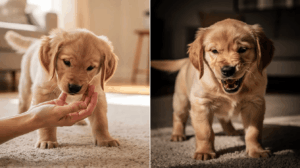
- Redirect to appropriate chew toys immediately. Keep suitable chew toys or a supervised frozen food toy within reach during playtime. When your puppy nips at your hands or feet, calmly substitute the toy. Over time, your puppy can learn that toys are appropriate for biting while skin and clothing are not. Avoid deliberately using your hands as toys.
- Use positive reinforcement for gentle play. When your puppy mouths gently or plays without biting, reward that behavior with treats, praise, toys, or continued play. Reinforcing the behavior you want helps your puppy understand what earns attention and interaction.
- Pause play after hard bites. When your puppy bites hard, stop the interaction calmly and briefly remove access to play. Some puppies pause after a short yelp, but others become more excited and bite harder, so discontinue yelping if it increases arousal. Resume interaction when your puppy is calmer, then redirect them to an appropriate toy and reward gentler play.
- Teach bite inhibition gradually. Appropriate play with carefully selected puppies or calm, socially skilled adult dogs may contribute to a puppy’s communication and play skills. Choose healthy, appropriately vaccinated dogs with compatible size and play styles, supervise closely, and give both dogs opportunities to disengage. Do not expect another dog to correct or train your puppy, and avoid uncontrolled dog-park interactions. You can also use structured play sessions that reinforce gentle play and pause when biting becomes too hard.
Never physically punish a puppy for biting. Hitting, scruff shaking, intimidating, or forcibly confronting a puppy can increase fear, stress, and defensive behavior while failing to teach an appropriate alternative. Use management, redirection, reinforcement, and qualified professional guidance instead.
Addressing Aggressive Biting Safely
When biting occurs with repeated stiffening, freezing, guarding, fear, pain, or escalating intensity, prioritize safety and address the underlying cause. Prevent further incidents while arranging veterinary or qualified behavioral assessment.
| Situation | Safe Response | What to Avoid |
| Puppy stiffens, growls, or bites over food or toys | Create distance and prevent access by children or visitors. Avoid taking the item by force. Ask a qualified professional to develop a gradual counterconditioning and trade plan. | Punishing growling, reaching into the food bowl, forcibly grabbing items, or using confrontational techniques |
| Puppy snaps during grooming or handling | Pause the procedure, create distance, and arrange a veterinary check for pain. Begin gradual low-stress handling or muzzle conditioning only with qualified guidance. | Forcing handling, using intimidation, rushing muzzle use, or ignoring warning signals |
| Puppy reacts aggressively toward visitors | Use barriers, a leash, or a secure resting area to prevent uncontrolled greetings. Give the puppy an escape route and obtain qualified guidance. | Forcing interaction, allowing visitors to corner or reach toward the puppy, or punishing defensive behavior |
| Bite intensity escalates or multiple incidents occur | Seek prompt veterinary and professional behavior assessment. Use management to prevent additional incidents while an individualized safety and behavior plan is developed. | Attempting to manage severe behavior with basic obedience alone, delaying intervention, or relying on inconsistent family responses |
Growling is communication that a puppy is uncomfortable, not proof of aggression. Punishing it may suppress an important warning signal without addressing the underlying emotion, so prioritize distance, safety, and professional guidance for serious or changing behavior.
Common Challenges and Solutions
Even with the right knowledge, Lehigh Valley pet owners frequently encounter situations that complicate the normal-versus-aggressive distinction. Here are the most common challenges and practical solutions.
Puppy Biting Escalates During Evening Hours
Many owners notice that puppy biting becomes harder or more frantic in the evening. Fatigue and overstimulation may contribute, but hunger, unmet activity needs, frustration, teething, or an overly exciting routine can also play a role. Build a predictable schedule with age-appropriate activity, enrichment, potty breaks, and quiet rest. Sleep needs vary, so observe your individual puppy rather than treating one daily total as a strict requirement.
Inconsistent Family Responses to Biting
Inconsistent responses can make it harder for a puppy to understand which behaviors earn play and attention. Establish clear household rules so everyone uses the same cues, calm redirection, brief pauses in play, and reinforcement for gentle behavior. Avoid physical or intimidating responses, particularly in homes with children.
Distinguishing Teething Pain From Behavioral Issues
Look at the complete pattern rather than assuming teething affects only object chewing. A teething puppy may mouth toys, furniture, clothing, hands, or feet, especially during play. Concerning patterns include repeated stiffening, freezing, guarding, avoidance, escalating bite pressure, or biting consistently linked to handling or another specific trigger. Sudden changes or signs of oral pain should be discussed with a veterinarian.
Owners can also use puppy chewing and redirection strategies to provide safer outlets for normal teething and mouthing.
Puppy Shows Mixed Signals Between Play and Aggression
Some puppies freeze momentarily, show a stiff tail wag, or display ambiguous body language that makes it difficult to determine whether the behavior is playful, fearful, or potentially aggressive.
If it is safe to do so without provoking or prolonging the behavior, a short video may give a veterinarian or qualified behavior professional additional context. Record naturally occurring behavior only and capture what happened before and after the incident. Video can support an assessment, but it does not replace direct evaluation or eliminate uncertainty.
When mixed signals persist, escalate, or affect safety, seek professional guidance rather than assuming patience alone will resolve them.
Conclusion and Next Steps
Most puppy biting is associated with exploration, teething, excitement, and learning the social rules of play. Puppy mouthing often becomes less frequent as teething ends, and the dog matures, but there is no universal age when every puppy stops biting. Progress depends on the individual puppy, their environment, reinforcement history, health, and the consistency of training and management. Redirection, appropriate chew outlets, calm play, and reinforcement for gentle behavior help shape safer habits.
Concerning biting may include repeated stiffening or freezing, guarding, fixed staring, lip lifting, intense fear, escalating bite pressure, or biting linked to specific triggers. No single signal proves aggression, but patterns that affect safety deserve veterinary and behavioral assessment. Early identification and appropriate management may improve outcomes.
Here is what to do now:
- Assess your puppy’s biting using the body-language and contextual guidelines in this article.
- Choose the appropriate response: use redirection and reinforcement for normal mouthing, or safety management and professional guidance for concerning biting.
- Begin with a veterinarian if the behavior appears suddenly, occurs during handling, or may involve pain.
- Request a free phone consultation if the behavior is escalating or affecting household safety.
Puppies needing early foundations may benefit from structured guidance with socialization, manners, leash skills, crate routines, and basic obedience. More serious biting, fear, guarding, or aggressive behavior requires an individualized assessment to determine the safest option. Basic obedience training can build communication and everyday skills, while the Reactivity and Aggression Training Program is the more relevant option for persistent reactivity or aggressive behavior.
Frequently Asked Questions
At what age should puppy biting completely stop?
Puppy mouthing often begins decreasing as teething ends, and the dog matures, but there is no age when every puppy should have stopped completely. Seek professional guidance based on the behavior’s context, intensity, escalation, and effect on safety rather than waiting for a particular age.
When should I contact a professional dog trainer?
Contact a professional if your puppy repeatedly delivers hard bites that cause injury, stiffens or freezes around triggers, guards resources, bites during handling, displays persistent fear, or escalates over time. Concerning behavior deserves assessment at any age, but normal play growling or mouthing in a puppy under 12 weeks should not automatically be labeled aggression.
Can aggressive puppy biting be completely corrected?
With early assessment and an appropriate plan, many puppies can learn safer responses, but no professional can guarantee that aggressive biting will be eliminated. Progress depends on the triggers, bite history, underlying fear or pain, environment, management, and consistency of follow-through. Safe, positive social experiences are important, but exposure should be carefully controlled because poor or overwhelming experiences can worsen fear or aggression.
How do I know if my puppy needs board-and-train services?
Board-and-train suitability depends on the puppy’s age, behavior, medical history, triggers, and safety risks. General obedience board-and-train programs should not automatically be treated as the right option for aggression. Begin with a veterinary examination and behavior assessment. For persistent reactivity or aggressive behavior, review the dedicated Reactivity and Aggression Training Program.
