
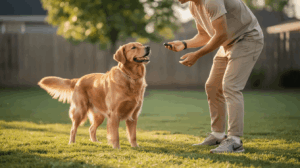
Teaching a dog to come when called builds an important layer of safety and everyday control. Recall can help you redirect your dog away from hazards, interrupt unwanted exploration, and reconnect before attaching a leash.
However, no recall cue should replace a leash, fence, or other physical safety measure when the environment is not secure. Even a well-trained dog may respond differently around traffic, wildlife, unfamiliar dogs, or a sudden frightening event.
This guide explains how to train a dog to come when called using a consistent cue, appropriate rewards, short indoor sessions, long-line practice, and gradual exposure to distractions.
Off Leash K9 Training of Lehigh Valley includes recall in several obedience programs, but owners can begin the basic training process at home.
What Reliable Recall Really Means
A strong recall means your dog responds promptly to the cue and returns close enough for you to reward, touch the collar, or attach a leash.
Recall involves several connected actions:
- Your dog hears the cue.
- Your dog stops or disengages from the current activity.
- Your dog turns toward you.
- Your dog travels back to you.
- Your dog remains close enough to be handled safely.
Reliability is specific to the environment. A dog may respond consistently in the living room but struggle in a yard filled with new smells. The same dog may need much more practice before responding around wildlife, moving vehicles, or other dogs.
The goal is not to prove that your dog will return under every imaginable condition. The goal is to build a strong response while continuing to use appropriate physical safeguards.
Why Dogs Ignore Recall Cues
A dog that does not return is not necessarily being stubborn. Common reasons include:
- The cue has not been fully taught.
- The owner has repeated the word until it lost meaning.
- The dog is distracted by smells, animals, people, or movement.
- The reward does not compete with the surrounding environment.
- Returning regularly causes play or exploration to end.
- The dog has been scolded after returning.
- The training environment became difficult too quickly.
- Fear, discomfort, fatigue, or a health problem interferes with movement.
Age, development, health, reinforcement history, and previous training can also affect recall. Evaluate the individual dog instead of assuming that age or breed alone determines performance.
If your current recall word has been repeatedly ignored, introducing a new cue may be easier than repairing the existing one.
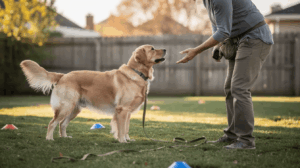
What You Need for Recall Training
Prepare the following items:
- Small food rewards your dog values
- A favorite toy or brief game, if your dog prefers play
- A clicker or verbal marker such as “yes”
- A standard leash
- A long training line for outdoor practice
- A quiet indoor area
- A fenced or otherwise controlled outdoor space
Identify rewards your dog genuinely values. These may include food, toys, play, praise, access to sniffing, or permission to return to an enjoyable activity.
The best reward depends on the dog and the difficulty of the environment. A reward that works in the kitchen may not be valuable enough at a park.
How to Train a Dog to Come When Called
Step 1: Choose a Consistent Recall Cue
Select one short cue, such as “Come” or “Here.” Ask everyone in the household to use the same word.
Avoid repeatedly using the cue when you cannot support a successful response. If you call while your dog is chasing wildlife, playing with another dog, or exploring an unsecured area before the cue is ready for that difficulty, your dog may learn that responding is optional.
Do not call your dog to punish them. Even when your dog returns slowly, reaching you should lead to a safe and worthwhile outcome.
Step 2: Build Attention to the Dog’s Name
Your dog’s name should usually mean, “Pay attention because more information is coming.”
Begin in a quiet room. Say your dog’s name once. When your dog looks toward you, mark the response and provide a reward.
Practice in different rooms before introducing minor distractions. Avoid repeating the name several times if your dog does not respond. Move closer or make the exercise easier instead.
The American Kennel Club’s recall guide similarly recommends beginning in a quiet indoor space, rewarding attention, and gradually increasing distance and environmental difficulty.
Step 3: Start With Short Indoor Recalls
Stand only a few feet from your dog. Say the dog’s name, followed by the recall cue.
Use an upbeat voice and move backward slightly if your dog needs encouragement. Mark the response when your dog commits to moving toward you, then provide the reward when your dog reaches you.
Keep sessions brief. Several successful repetitions are more useful than continuing until your dog becomes distracted or tired.
If your dog does not respond:
- Do not repeat the cue continuously.
- Reduce the distance.
- Remove distractions.
- Improve the reward.
- Try again when your dog is more engaged.
Step 4: Teach a Close Finish and Collar Touch
Reaching you is only part of a useful recall. Your dog should also remain close enough for you to attach a leash or hold the collar safely.
Practice touching the collar separately:
- Reach toward the collar.
- Touch or briefly hold it.
- Mark the behavior.
- Provide a reward.
- Release your dog.
Progress gradually if your dog moves away from hands or appears uncomfortable. Avoid suddenly grabbing a fearful dog.
Once your dog is comfortable, include the collar touch at the end of selected recall repetitions.
Step 5: Increase Indoor Distance
When your dog responds consistently from a short distance, practice from farther away in the same room. Later, call from a hallway or a nearby room.
Change only one element at a time. If you increase distance, keep the environment quiet. If you add a minor distraction, shorten the distance.
A useful guideline is to advance when your dog succeeds consistently at the current level. If performance drops, return to an easier setup rather than repeating the cue more loudly.
Step 6: Move Outside With a Long Line
Outdoor environments introduce smells, movement, animals, and unfamiliar sounds. Use a fenced area or a long line until your dog has demonstrated a strong response around the distractions present.
A long line gives your dog more room to explore while maintaining a physical connection. Common lengths range from about 15 to 50 feet.
Use the line in an open area where it is unlikely to wrap around people, dogs, trees, or equipment. Prevent your dog from reaching full speed and hitting the end of the line. Ask a qualified trainer for equipment guidance if you are unsure about safe handling.
Allow your dog to investigate the environment, then call once when success is reasonably likely. Reward your dog for turning away from the environment and returning to you.
The long line is a safety tool. It should not be used to drag your dog toward you.
Step 7: Add Distractions Gradually
Distance and distractions are separate challenges. Avoid increasing both at the same time.
A gradual progression may include:
- A quiet fenced yard
- A calm open area on a long line
- A person visible at a distance
- A dog visible far away
- Moderate household or park activity
- More distracting environments where safe and permitted
Stay far enough from a distraction that your dog can still eat, think, and respond. If your dog becomes fixated or repeatedly fails, increase the distance from the trigger.
Do not test recall by unclipping the leash in an unsecured environment. Use physical safeguards until the environment, local rules, and your dog’s demonstrated training level support greater freedom.
Step 8: Reward and Release Back to the Activity
If recall always ends play, sniffing, or exploration, your dog may begin avoiding you.
During selected practice repetitions:
- Call your dog.
- Reward the return.
- Touch the collar or briefly attach the leash.
- Use a release cue.
- Allow your dog to resume the activity when appropriate.
Returning to an enjoyable activity can itself become a reward. This helps your dog learn that responding does not always mean the fun is over.
Step 9: Maintain the Skill
Recall requires continued practice. Use it occasionally during walks, yard time, and other manageable activities, even when you do not need to leave.
Continue rewarding strong responses, especially around meaningful distractions. Rewards can vary between food, play, praise, and permission to resume an activity.
Recall Games That Make Practice More Engaging
Round-Robin Recall
Ask two or more family members to stand apart. Take turns calling the dog and rewarding each successful return.
Begin indoors before increasing the distance or moving outside.
Hide-and-Seek
Hide in an easy location and call your dog once. Reward generously when your dog finds you.
Play this game only in a secure area.
Toss and Return
Toss a treat a short distance away. After your dog eats it, use the recall cue. Reward the return with another treat or a brief game.
Restrained Recall
One person gently holds the dog while another moves a short distance away. The second person calls, and the first person releases the dog.
Do not use this game if restraint creates fear, frustration, or conflict.
Common Recall Mistakes
Repeating the Cue
Saying “Come, come, come” can teach your dog that the first cue is not important. Say the cue once, then change the setup if your dog cannot respond.
Punishing the Return
Scolding a dog after they reach you can create a negative association with returning. Address the training setup rather than punishing the completed recall.
Making Every Recall End the Fun
Practice calling, rewarding, and releasing your dog back to safe activities.
Advancing Too Quickly
A response learned indoors is not automatically reliable at a park. Rebuild the behavior as the environment changes.
Testing Instead of Training
Unclipping the leash to see whether recall works can create a dangerous situation. Practice with a fence or long line until your dog is ready for the specific environment.
Troubleshooting Recall Problems
My Dog Ignores the Cue Outside
Return to a quieter area and use a long line. Reduce the distance, improve the reward, and call when your dog is not completely absorbed in a distraction.
If the cue has been ignored repeatedly for months, consider introducing a new word and teaching it from the beginning.
My Dog Stops Several Feet Away
Reward only when your dog comes close enough to be handled. Practice collar touches separately and avoid chasing your dog.
Releasing your dog back to play after selected recalls can also reduce avoidance.
My Dog Returns Slowly
A slow return can reflect low motivation, confusion, fear, fatigue, physical discomfort, or a history of unpleasant outcomes after reaching the owner.
Use better rewards, shorter sessions, and an encouraging tone. Contact your veterinarian if your dog’s movement has changed or appears painful.
Recall Fails Around Dogs or Wildlife
Increase the distance from the distraction and return to long-line practice. Work where your dog notices the trigger but can still respond.
Dogs showing intense fixation, aggression, fear, or reactivity may need individualized professional guidance.
E-Collars and Recall Training
An e-collar is not required to teach recall, and this article does not provide instructions for applying one.
A 2020 study published in Frontiers in Veterinary Science evaluated 63 dogs with off-leash behavior concerns. The reward-focused group performed better than the e-collar group on several measures, including responses after a single cue and recall latency. The researchers concluded that e-collar training was not necessary for effective recall in the circumstances studied.
The American Veterinary Society of Animal Behavior recommends reward-based methods for dog training and behavior modification.
Owners should ask any prospective trainer to explain the methods, equipment, risks, and alternatives associated with a program before enrolling.
When Professional Training May Help
Professional support may be useful when:
- Your dog repeatedly ignores recall in controlled settings.
- Your existing cue has a long history of being ignored.
- Your dog cannot disengage from animals, people, or movement.
- Recall practice triggers fear, avoidance, or aggression.
- You are unsure how to handle a long line safely.
- Your dog has escaped or is at significant risk of running away.
- Several household members need help using the same system.
For significant fear, aggression, or reactivity, owners may also use the IAABC consultant directory to search for credentialed behavior professionals.
Off Leash K9 Training offers dog obedience training in Lehigh Valley through private lessons and Board & Train options. Available commands and program formats vary, so discuss your dog’s age, behavior history, current skills, and training goals before choosing a program.
Frequently Asked Questions About Recall Training
How long does it take to train a dog to come when called?
There is no universal timeline. A dog may learn the meaning of the cue within several sessions but require much more practice before responding around distance or distractions.
Training history, health, age, environment, reinforcement value, and owner consistency all affect progress.
What should I do if my dog ignores “Come”?
Avoid repeating the cue. Make the situation easier by reducing the distance or distractions, then reward a successful response.
If the word has been ignored repeatedly, consider teaching a new cue from the beginning.
Should I use my dog’s name as the recall cue?
Your dog’s name is best used to gain attention. Follow it with a separate recall cue, such as “Come” or “Here,” when you want your dog to return.
Can I practice recall at a dog park?
A busy dog park is usually too difficult for early training. Begin indoors, then use fenced spaces or a long line in quieter outdoor environments.
Follow all local leash rules and do not rely on recall alone in unsecured areas.
Can recall make my dog completely safe off leash?
No recall cue can guarantee a dog’s safety in every situation. Traffic, wildlife, fear, pain, sudden noises, and unfamiliar animals can affect behavior.
Continue using leashes, fences, and other physical safeguards whenever the environment requires them.
Do I need an e-collar for reliable recall?
No. An e-collar is not required to teach recall. Reward-focused training, controlled environments, and long-line practice can build a strong recall response without one.