
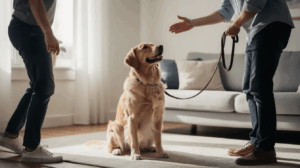
Dogs can learn calmer greeting behavior when owners consistently prevent unwanted jumping, reward four paws on the floor, and teach an alternative such as sitting or standing calmly. Jumping is a common concern, but progress depends on why the dog jumps, how long the behavior has been practiced, the training environment, and the consistency of everyone involved.
This guide covers practical methods for puppies and adult dogs with established jumping habits. Whether your dog jumps on guests at the front door, jumps toward people during walks, or knocks into family members when they arrive home, these strategies can help. It is written for dog owners throughout the Lehigh Valley who want safer greetings and a stronger foundation for everyday obedience. Visit Off Leash K9 Training of Lehigh Valley to learn more about the local training team.
Dogs often jump because greetings, touch, eye contact, or verbal reactions have reinforced the behavior. Excitement, overstimulation, anxiety, or uncertainty may also contribute. An effective plan prevents repeated jumping, rewards the greeting behavior you want, and keeps expectations consistent among family members and visitors.
By the end of this guide, you will:
- Understand why dogs may jump and what can reinforce the behavior
- Learn immediate management techniques
- Follow a structured training plan
- Troubleshoot common setbacks
- Learn how to build calmer greetings in different settings
Understanding Why Dogs Jump on People
Jumping during greetings is often driven by excitement or reinforced by human attention rather than an attempt to establish dominance. However, not every dog jumps for the same reason. Anxiety, conflict, frustration, or overstimulation can also contribute. Understanding the likely cause matters because it affects how the behavior should be managed and trained. Veterinary guidance on jumping during greetings recommends identifying the desired greeting behavior, preventing repeated jumping, and rewarding achievable alternatives.
Natural Greeting Behavior
Social dogs may jump because it brings them closer to a person’s face and often produces immediate interaction. Excitement during greetings can make the behavior more likely. However, size alone does not determine how persistently a dog will jump, and owners should consider the individual dog’s body language, history, and response to people.
Attention-Seeking Behavior
Dogs may learn that jumping produces attention, even when the reaction involves talking, touching, pushing, or scolding. If those reactions are rewarding to the dog, jumping is more likely to continue.
Physical corrections such as kneeing the dog can also cause pain, fear, or defensive behavior and should be avoided. When it is safe to do so, withhold attention during jumping and provide attention or another valued reward when all four paws are on the floor.
Excitement and Impulse Control
Excitement and limited impulse control can contribute to jumping. When an owner comes home or a guest arrives, a dog may repeat whichever greeting behavior has produced interaction in the past.
Puppies and adolescent dogs may need additional practice because calm greetings are still new skills. Training helps the dog learn that keeping all four paws on the floor, sitting, or waiting on a mat can earn attention and rewards.
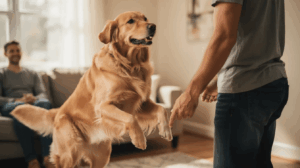
Immediate Control Techniques
Now that you understand why your dog may jump, here are three methods you can begin using. These techniques work together by preventing repeated jumping and reinforcing the behavior you want.
The Ignore and Redirect Method
Dogs can learn that calm behavior produces attention while jumping does not. When it is safe, avoid eye contact, talking, petting, or pushing while the dog is jumping. Turn slightly away or step behind a gate if necessary. As soon as all four paws are on the floor, mark and reward the desired behavior with calm attention, praise, or a treat.
Withholding attention alone may not be enough if the dog finds jumping rewarding for another reason. Combine this method with management and active reinforcement of the greeting behavior you want. Avoid turning your back when doing so could allow a large or highly excited dog to knock you down.
Environmental Management Tools
Managing the environment can prevent repeated jumping while the dog learns a different greeting. An adult handler can hold a leash without jerking or yanking it, or the dog can remain behind a secure baby gate while guests enter. Do not leave a dog tethered or allow the leash to create a tripping hazard.
A crate or separate room may also provide temporary separation if the dog is already comfortable there and the space is not used as punishment. A designated mat can give the dog another option when the doorbell rings. Management prevents practice, but it should be combined with training because a barrier alone does not teach a greeting behavior.
Teaching Alternative Greeting Behaviors
Teaching an alternative gives your dog a clear way to earn attention. Options include sitting, standing with four paws on the floor, waiting on a mat, or remaining behind a gate until calm. Sitting is incompatible with jumping, but it may be too difficult for some highly excited dogs at first. Rewarding four paws on the floor can be an easier starting point.
Delivering treats low or placing them on the floor can encourage a lower body position. Use food carefully in multi-dog households or when resource guarding is a concern. These techniques create an immediate management and training toolkit that can be developed through structured practice.
Step-by-Step Training Process
Moving from reactive management to proactive training requires a gradual approach. Practice simple exercises before testing the behavior during an exciting front-door greeting.
Phase 1: Foundation Training
Begin in a calm, low-distraction environment:
- Practice the chosen behavior in a calm setting. Begin with sit, stand, or four paws on the floor without the pressure of a real greeting. Reward successful responses.
- Introduce controlled greeting practice. Have a familiar person approach while an adult handler manages the leash. If the dog begins to jump, the person should pause or move away. Reward the dog when all four paws return to the floor.
- Reward the desired behavior promptly. Mark and reward four paws on the floor, sitting, or waiting on a mat so the dog can identify what earned the reward.
- Build duration gradually. Increase the amount of calm behavior required in small steps while keeping the exercise achievable.
Keep practice brief and adjust it to your dog’s attention and emotional state. Once your dog succeeds in a quiet room, practice near the front door and then with cooperative visitors. Later, move to controlled outdoor locations with appropriate distance from distractions. A busy dog park is not an appropriate place to begin greeting practice.
Training Method Comparison
| Training Component | Purpose | Important Limitation |
| Rewarding a preferred greeting | Teaches the dog which behavior earns attention | Requires repetition in different situations |
| Withdrawing attention | Removes social interaction that may reinforce jumping | May not work alone if jumping serves another function |
| Environmental management | Prevents jumping through leashes, gates, distance, or mats | Prevents practice but does not teach the complete skill by itself |
| Professional guidance | Provides individualized assessment and coaching | Results still depend on the dog, training plan, and owner follow-through |
A small applied behavior analysis study involving five companion dogs found that jumping was maintained by owner-provided attention or access to preferred objects. A time-based reinforcement intervention reduced jumping for the participating dogs. Because this was a small, single-case study, its percentages and outcomes should not be treated as guarantees for every dog.
Select an approach based on the likely reason for the jumping, the dog’s body language, safety concerns, and your ability to apply the plan consistently. Rewarding an appropriate greeting and preventing repeated jumping provide a practical starting point.
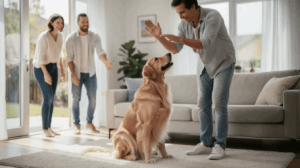
Common Challenges and Solutions
Even with an appropriate plan, setbacks can happen. Here are common obstacles and ways to address them.
Inconsistency Among Family Members
Jumping may continue when people in the household follow different rules. If one person provides attention for jumping while another withholds it, the behavior may become more persistent because it is still rewarded sometimes.
Agree on the preferred greeting behavior and how each person will respond. Demonstrate the plan to family members, place a reminder near the entrance, and brief visitors before they interact with the dog.
Temporary Behavior Escalation
Some dogs may temporarily jump, bark, or paw more when a behavior stops producing its usual result. This response is sometimes called an extinction burst, but it does not occur in every case and should not be treated as proof that a training plan is working.
Prevent the dog from rehearsing unsafe behavior and continue rewarding the preferred greeting. If the behavior becomes more intense, creates a risk of injury, or includes growling, snapping, or other concerning signs, increase management and seek qualified professional guidance.
Visitor Management Difficulties
Dogs that greet family members calmly may still struggle when visitors increase the excitement level. Before guests enter, have an adult manage the dog with a leash or secure gate. Ask visitors to wait until the dog has four paws on the floor or performs another practiced greeting behavior before providing attention.
Begin with calm, familiar people who will follow the training plan. Gradually practice with other cooperative visitors only when the dog remains comfortable and manageable.
Large or Strong Dogs
Jumping from a large, strong, or highly excited dog can create a safety risk, particularly for children, older adults, or anyone with limited balance. Use a secure gate, distance, or a leash managed by a capable adult during greetings. Do not depend on a child or vulnerable guest to manage the dog.
A properly fitted harness may provide additional control, but equipment does not replace training. Appropriate physical exercise and enrichment can support overall well-being, but they do not guarantee calm greetings. If jumping creates a genuine risk of injury, consult a qualified professional for an individualized plan.
Teaching a dog to stop jumping requires patience, management, and consistent reinforcement of the behavior you want.
Conclusion and Next Steps
Jumping can improve when owners prevent repeated practice, teach and reward an alternative behavior, and apply the greeting plan consistently. The appropriate strategy depends on why the dog jumps and whether excitement, anxiety, fear, or another concern is involved.
Begin by setting up safe environmental management near the entrance and practicing the preferred greeting in a calm, low-distraction setting. Make sure family members and visitors understand the plan, and track progress by recording what happened before and after each jump. Increase the difficulty gradually as your dog becomes more consistent, returning to an easier exercise whenever needed.
Calm greetings can support other everyday skills, including leash manners, attention around distractions, and general obedience. Continue practicing in appropriate environments without assuming that success in one setting will automatically transfer to every situation. If you need individualized guidance, contact us today to discuss your dog’s needs and available training options.
Professional Training Support
If your dog’s jumping creates a safety concern or you are having difficulty applying the plan consistently, professional guidance may help. The local dog obedience training service lists private lessons, Board and Train programs, puppy training, behavior consultations, and owner education. Published training goals include greeting manners and reducing jumping.
Review the current plans and pricing for available program details and inclusions. Because results and timelines vary, no program should be presented as guaranteeing immediate or permanent correction. You can contact the training team to request a free phone consultation and discuss which available option may fit your dog’s needs.
Frequently Asked Questions
Why does my dog jump on people?
Dogs often jump during greetings because they are excited or have learned that jumping produces attention. Anxiety, uncertainty, frustration, or overstimulation may also contribute, so consider the dog’s complete body language and the situation.
How can I stop my dog from jumping on guests?
Prevent repeated jumping with a leash, gate, distance, or designated mat. Reward four paws on the floor or another practiced greeting behavior. Ask guests not to pet, talk to, or touch the dog while jumping.
Should I scold or push my dog when it jumps?
Scolding or pushing may provide attention and unintentionally reinforce the behavior. Physical corrections can also cause fear or discomfort. Prevent the jump when possible and reward an appropriate alternative instead.
Can older dogs learn to stop jumping?
Yes. Adult and senior dogs can learn different greeting behaviors. Progress depends on the individual dog’s health, learning history, motivation, and the consistency of the training plan.
How do treats help teach my dog not to jump?
Treats can reinforce four paws on the floor, sitting, or waiting calmly. Deliver the reward low so it does not encourage the dog to jump upward. Use another reward if food causes conflict or is not motivating to your dog.
What should I do if my dog gets overly excited and jumps despite training?
Increase distance or place your dog behind a secure gate while guests enter. Resume training only when the dog is calm enough to participate. Practice with familiar, cooperative visitors before introducing more difficult situations. Seek professional guidance if the behavior creates a safety risk or includes fear, growling, snapping, or aggression.
