

The cost of dog training depends on the program format, training goals, behavior concerns, services included, and the amount of professional support required. Local options include a Puppy Training Consultation, an Online Puppy Training Course, private obedience packages, behavior-focused training, and immersive Board and Train programs. Because rates and program details can change, owners should review the current plans and pricing before enrolling.
This guide is written for dog owners who want to compare training options with clarity. It covers the factors that influence dog training prices, how common training formats differ in cost and structure, what a training program may include, and how to select the right option for your budget and your dog’s needs. It does not promote a single approach. Instead, it gives you the practical knowledge to make a confident, informed decision.
A single national average does not provide enough information to compare dog training programs accurately. Private lessons, online courses, puppy programs, behavior-focused training, and Board and Train options differ significantly in structure and inclusions. The lowest price is not automatically the best value, and the highest price does not guarantee better results. What matters is whether the program fits your dog’s needs and provides the owner education required to maintain progress.
By the end of this article, you will understand:
- Why dog training cost varies across providers and regions
- How group classes, private lessons, online courses, and Board and Train programs compare
- What may be included in a quality training program
- How to evaluate trainers and avoid common pitfalls
- When professional dog training may be worth the investment
Key Takeaways
- Training format has a major effect on total cost. Online education, private lessons, behavior-focused programs, and Board and Train options provide different levels of instruction and support.
- Location, program length, training goals, and included equipment can affect price. Compare complete program details rather than relying on a single hourly rate.
- The cheapest option may not provide the best value. The program should match the dog’s age, current skills, behavior history, and training goals.
- Training may help reduce preventable behavior problems. Results depend on the dog, the training plan, and the owner’s consistency after professional instruction.
- Program inclusions matter. Owner education, equipment, follow-up lessons, transfer sessions, and refresher policies can affect the overall value.
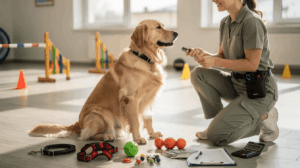
What Affects the Cost of Dog Training?
Multiple factors influence what you will pay for professional dog training. Understanding each one helps you compare programs accurately rather than simply choosing the lowest number.
Trainer Experience and Certifications
A trainer’s education, practical experience, and ability to explain a training plan can influence both price and program quality. Credentials such as CPDT-KA, CDBC, and CAAB have different eligibility requirements and areas of focus, but a credential alone does not guarantee a specific outcome. Review the trainer’s documented background, experience with concerns similar to your dog’s, training methods, owner education process, and policies before enrolling.
Geographic Location
Dog training prices vary by location because operating costs, facility expenses, travel time, local demand, and program availability differ between providers. Instead of relying on broad regional percentages, compare current rates and program inclusions from trainers serving your area. Dog owners reviewing dog training options in the Lehigh Valley should use the provider’s current pricing page as the definitive source.
Dog’s Age, Breed, and Behavior History
A dog’s age, training history, current skills, and behavior concerns can affect the type and length of training recommended. Puppy programs may focus on house-training routines, crate training, socialization, manners, and foundational obedience. Dogs displaying fear, anxiety, reactivity, or aggression may need a more individualized assessment and a longer training plan. Breed can help trainers understand general tendencies, but the recommendation should be based on the individual dog rather than breed alone.
Training Goals and Complexity
Training goals influence both program structure and overall cost. Current Lehigh Valley options include Basic Obedience, Basic & Advanced Obedience, Therapy Dog Preparation, and Reactivity & Aggression Dog Training. These programs address different goals and should not be compared by lesson count alone.
Session Frequency and Program Duration
Longer or more immersive programs generally have higher total costs because they include additional training time and services. However, owners should not assume that every package provides a discount compared with individual lessons. Review the number of lessons, equipment, owner training, follow-up requirements, refresher policy, and payment terms before purchasing. Availability and rates should always be confirmed directly with the provider.
Comparing Common Dog Training Formats
Each training format serves different needs. Understanding the structure, owner responsibilities, and program inclusions can help you spend money where it provides the most practical value.
Group Classes
Group classes are offered by some training providers and may be appropriate for foundational skills around controlled distractions. Rates, class sizes, and eligibility vary by provider. They may not suit every dog, particularly when fear, reactivity, aggression, or other safety concerns make a group environment difficult. Group classes are not currently listed among the Lehigh Valley programs compared in this article.
Private Lessons
Private lessons provide individualized instruction and direct owner participation. Current Lehigh Valley options include four-lesson Basic Obedience, eight-lesson Basic & Advanced Obedience, and nine-lesson Reactivity & Aggression Training. Program eligibility and expected outcomes depend on the dog’s needs and continued practice at home.
Private lessons may be useful for leash pulling, foundational obedience, behavior concerns, or owners who want direct instruction. The trainer can adjust the training plan based on the individual dog’s progress and the owner’s ability to maintain the skills between lessons.
Online Courses
The currently listed Online Puppy Training Course includes 24 video modules, eight worksheets, and approximately three hours of training content. It is a self-guided puppy education option rather than a package of live virtual sessions.
Online education may be useful for foundational puppy topics and owner education. However, dogs with serious behavior or safety concerns may require individualized professional guidance rather than relying entirely on self-guided training.
Board and Train Programs
Board and Train provides immersive training while the dog stays with a professional trainer. Current options include the 1 Week Freedom Board & Train, 10 Day Pawsitive Foundation Puppy Board & Train, 10 Day On-Leash Board & Train, and 2 Week Board & Train.
The Comprehensive Puppy to Adult Board & Train combines two programs completed at different developmental stages. Owner instruction and continued practice remain necessary after the dog returns home.
Training Format Comparison
| Format | Structure | May Be Appropriate For |
| Puppy Training Consultation | Puppy-focused consultation | Early routines and owner guidance |
| Online Puppy Training Course | Self-paced digital course | Foundational puppy education |
| Basic Obedience | Four private lessons | Core commands and leash manners |
| Basic & Advanced Obedience | Eight private lessons | Foundational and advanced skills |
| Therapy Dog Preparation | Eight-week program | Therapy dog evaluation preparation |
| Reactivity & Aggression Training | Nine private lessons | Individualized behavior concerns |
| Board and Train | Immersive training with a professional trainer | Structured obedience and manners |
| Comprehensive Puppy to Adult | Two Board and Train programs | Training across developmental stages |
Program details, eligibility, rates, and availability may change. Confirm current information before purchasing.
What Is Typically Included in a Training Program?
Program inclusions vary significantly by provider and format. Understanding exactly what you are paying for helps you determine whether the total cost represents suitable value for your dog and your goals.
Initial Consultation and Assessment
The assessment process depends on the selected program. The Reactivity & Aggression program includes a one-hour evaluation as its first lesson, while other programs have different enrollment and training structures. Ask whether an evaluation is required, what it includes, and whether it is part of the quoted cost.
Core Training Sessions
The heart of any training program is the instruction itself. Basic obedience may cover skills such as come, sit, down, place, heel, loose-leash walking, and everyday manners. Puppy programs may address age-appropriate socialization, crate-training routines, house-training schedules, greeting manners, and foundational obedience.
More advanced programs may work toward off-leash control, therapy dog preparation, or obedience around higher levels of distraction. The exact curriculum depends on the selected program and the individual dog.
Training Materials and Equipment
Equipment varies by program. The current pricing page states that Basic Obedience and several Board and Train options include most training equipment, which may include an e-collar or prong collar when used and a 15-foot leash. Owners should confirm the exact equipment, training methods, and replacement or warranty terms associated with their selected program.
Owner Education and Homework
Owner education is an important part of maintaining training progress. Board and Train programs may include turnover sessions that explain the dog’s commands, handling, and continued practice. Private lessons require owners to apply what they learn between appointments.
The amount of homework and owner involvement varies by program. Before enrolling, ask what you will need to practice at home, how often practice is recommended, and how the trainer will help you maintain the dog’s skills.
Follow-Up Sessions and Ongoing Support
Follow-up policies are program-specific. The 2 Week Board & Train includes a mandatory one-hour follow-up lesson two weeks after turnover. The pricing page states that missing this lesson results in the loss of free refreshers. The 1 Week Freedom program lists a heel lesson and a down lesson after turnover.
Other programs may have different follow-up requirements or refresher policies. Review the written terms for the exact program you select rather than assuming ongoing support is included.
Progress Updates
Progress reports, videos, written evaluations, and training logs should not be considered standard inclusions unless the provider specifically lists them. Ask how progress will be communicated, what owner instruction is included, and how the trainer evaluates whether the dog is ready to complete the program.

How to Choose the Right Program for Your Budget
Balancing cost with effectiveness requires looking beyond the listed rate. The right program should match your dog’s needs, your lifestyle, and your ability to continue the training at home.
Questions to Ask Before Committing
Before spending money on any program, ask potential trainers these questions:
- What education, experience, or credentials do you have?
- What training methods and equipment do you use?
- What is included in the quoted cost?
- Are owner instruction, equipment, and follow-up lessons included?
- How much owner practice is required outside of sessions?
- What results can I realistically expect?
- How will progress be measured and communicated?
- What happens if the original training goals need to be adjusted?
- Are payment plans available for this specific program?
Evaluating Trainer Qualifications
Review the trainer’s documented background, professional experience, training approach, and experience with dogs displaying concerns similar to yours. A credential can demonstrate that specific requirements have been completed, but credentials should not be treated as a guarantee of results.
Ask whether observation is available or request examples of the trainer’s work. A professional trainer should be willing to explain the training plan, equipment, owner responsibilities, and realistic expectations. A provider’s About page may provide information about the training team and its background.
Considering Total Cost
The listed program rate may not represent every possible expense. Ask about travel charges, required equipment, replacement equipment, treats, crates, follow-up lessons, and maintenance sessions. Some programs include equipment and owner instruction, while others require owners to purchase certain items separately.
Also consider the required time commitment. Private lessons, homework, turnover sessions, follow-up appointments, and travel to a training location all require owner participation. Compare complete program details rather than focusing only on the initial cost.
When to Invest in Specialized Training
Dogs displaying aggression, serious reactivity, or a bite risk require careful management and individualized professional assessment. Depending on the behavior and potential medical factors, the appropriate starting point may include a veterinarian, veterinary behaviorist, or qualified behavior professional. No program should guarantee that major aggression will be eliminated.
Therapy dog preparation and service dog training follow different standards. Therapy dog evaluation requirements vary by organization and facility. Under the Americans with Disabilities Act, service animals are not required to hold certification or complete a specific professional training program. Service dogs must instead be individually trained to perform work or tasks related to a person’s disability.
Professional guidance may help owners improve safety, communication, and behavior management, but it should not be described as guaranteed to prevent veterinary expenses, property damage, rehoming, or legal liability.
Red Flags to Avoid
Be cautious of trainers who guarantee that every dog will achieve the same result, refuse to explain their methods or equipment, or cannot provide written program inclusions and policies. Credentials can be useful, but they should be considered alongside relevant experience, transparency, owner education, safety practices, and the trainer’s ability to explain realistic expectations.
A very low rate may reflect a limited program, while a high rate does not automatically indicate higher quality. Compare the curriculum, owner instruction, equipment, follow-up support, policies, and expected owner responsibilities before enrolling.
Making Cost-Effective Decisions
To control costs, begin with a consultation or clearly defined foundational program that matches your dog’s current needs. Compare private lessons, online education, and Board and Train based on what each option includes rather than assuming one format is always more economical.
Address important safety and behavior concerns first, then add advanced skills when appropriate. Confirm current program details, equipment inclusions, payment terms, and follow-up requirements before purchasing. Do not rely on unverified community classes, discounts, or free puppy events when planning your budget.
Final Thoughts
The cost of dog training varies based on the training format, your dog’s age and behavior, geographic location, trainer experience, and what is included in the program. Dog training costs can range from self-guided education to comprehensive immersive programs. Neither end of that range is automatically right or wrong.
The cheapest program may not provide good value if it does not address your dog’s most important needs. At the same time, an expensive option may not be appropriate if it lacks sufficient owner education or does not match your goals. Long-term progress depends on the training plan, the individual dog, and the owner’s consistency at home.
If you are uncertain where to start, request a free consultation and ask for a detailed breakdown of the available plans and pricing. Compare what each program includes and ask what will be required from you during and after training. Professional guidance can be a valuable investment when the program fits your dog’s needs and gives you the knowledge to maintain the training.
Frequently Asked Questions
How much does dog training cost?
The cost of dog training depends on the format, program length, behavior concerns, equipment, owner instruction, and follow-up support included. Online education, private lessons, specialized behavior programs, and Board and Train options have different pricing structures. Review the current pricing page and compare complete program inclusions before enrolling.
Are group classes effective for behavior problems?
Group classes may help some dogs practice foundational skills around controlled distractions, but suitability depends on the dog and class environment. Dogs with aggression, significant fear, or serious reactivity may need an individualized assessment before entering a group setting.
What extra costs might come up beyond basic training fees?
Potential additional expenses may include equipment, treats, crates, travel fees, follow-up appointments, or maintenance sessions. Some programs include training equipment and owner instruction, while others may charge separately. Ask for a complete list of inclusions before purchasing.
Does a higher cost always mean better results?
Not necessarily. Results depend on the fit between the program and your dog’s needs, the trainer’s experience and methods, the program structure, and your commitment to continued practice. A higher rate should be supported by relevant services and clearly explained inclusions.
When is professional training worth the investment?
Professional guidance may be valuable when behavior affects safety or daily life, when an owner needs individualized instruction, or when advanced reliability is a goal. Therapy dog preparation may require organization-specific testing, while service dogs are not required to hold certification under the ADA.
What payment options are available for dog training?
Some program pages list installment options that require calling for details. The main pricing page states that packages must be paid in full before lessons are scheduled. Because terms can vary by program, confirm the current deposit, payment plan, and scheduling requirements directly with the provider.
Can I train my dog myself to save money?
Self-guided resources can help motivated owners teach foundational skills and reinforce appropriate behavior. However, aggression, bite risk, significant fear, severe reactivity, or other complex concerns may require individualized help from a qualified professional. A veterinarian should also evaluate sudden behavior changes that could have a medical cause.
