
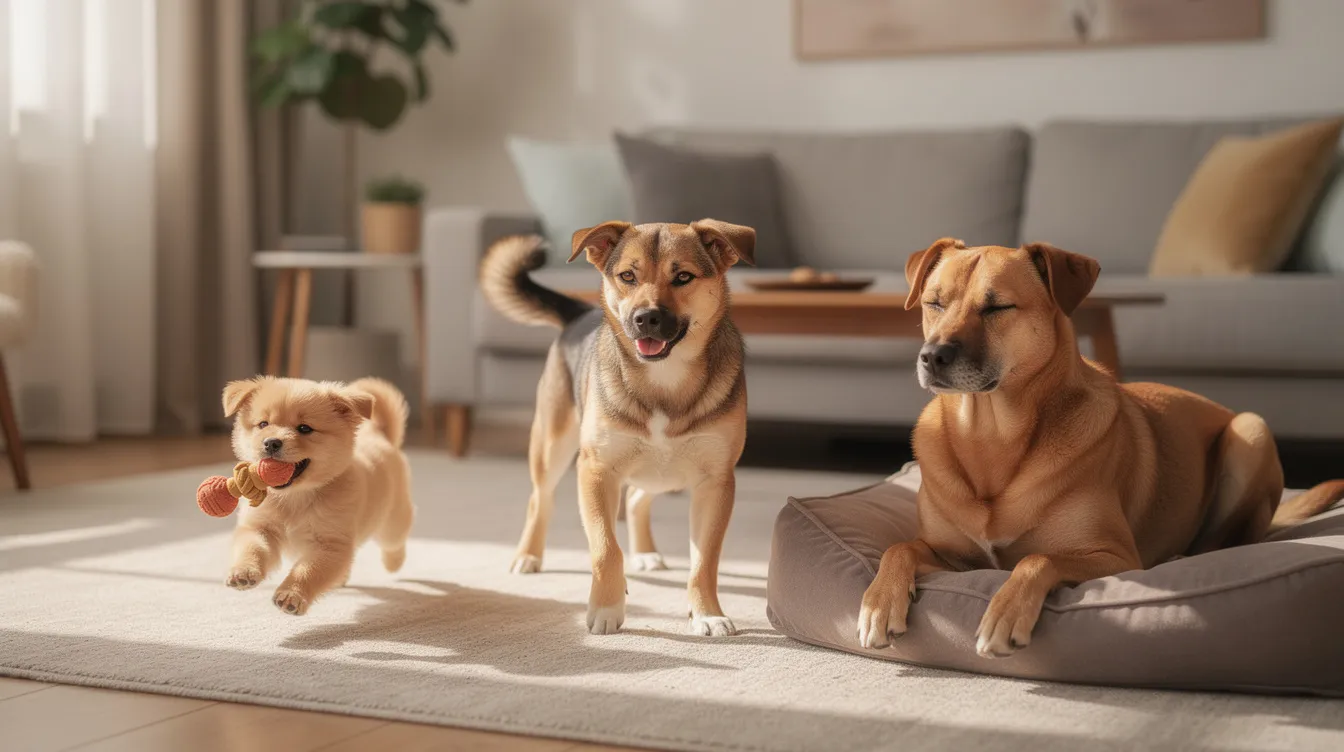
Most puppies calm down between 12 and 24 months, though the exact timeline depends on breed, size, individual temperament, and training consistency. If your pup has so much energy that every day feels like a tornado hit your living room, that behavior is completely normal for the puppy stage.
This guide covers puppy energy development from 8 weeks through 3 years, the factors that speed up or delay calmer behavior, and specific training methods that help puppies learn to settle. The target audience is pet parents in their first year of dog ownership who are wrestling with a hyper puppy and wondering whether this level of boundless energy will ever end.
Here is the direct answer: puppies typically calm down between 12 and 24 months. Smaller breeds often mature and calm down faster compared to larger breeds, which may take up to 2-3 years to calm down. Maturity and settling occur gradually rather than at a specific age; there is no on/off switch.
After reading this article, you will understand:
- The developmental stages that drive puppy energy levels at each age
- How breed, size, gender, and training shape the timeline to calmness
- Specific age-based training methods to accelerate impulse control
- When normal puppy energy crosses into behavior that needs professional help
- How to choose between DIY training, private lessons, and board-and-train programs
Understanding Puppy Energy Development
Puppies are built to move, explore, and test their environment. Rapid brain development, skeletal growth, and the need to learn social structure all require high energy output. A puppy burning through what feels like an inexhaustible battery is doing exactly what biology designed it to do.
Energy levels connect directly to a pup’s developmental needs. Physical activity builds coordination and muscle. Interaction with other dogs teaches bite inhibition and social cues. Exploration of the outside world creates neural pathways that shape adult behavior. Without these outlets, excess energy surfaces as mischievous behavior, destructive chewing, or demand barking.
Natural Development Stages
Birth to 16 weeks marks the socialization period. Puppies at this age explore through short bursts of activity followed by long sleep cycles (up to 18-20 hours per day for very young pups). Puppy socialization is critical before 16 weeks of age for behavioral development; puppies should be socialized between 4 and 14 weeks. Curiosity peaks during this window, and a well-socialized puppy gains the foundation for calm adult behavior.
4 to 12 months is the juvenile phase and adolescent period. Puppies peak in energy between 3 and 6 months, with most puppies being most hyper during that window. Sexual maturity begins around 6-9 months, bringing hormonal shifts that fuel marking, roaming, and excitability. Puppies tend to go through an adolescent phase between 6 and 14 months, and behavioral rebellion peaks during adolescence from 6 to 18 months. Continued boundary testing and selective hearing are standard features of this period.
12 to 24 months brings gradual maturation. Physical growth slows or stops for small and medium dog breeds. Impulse control develops as the brain’s prefrontal regions mature. Most puppies start to calm down between 12 and 24 months, though larger breeds may still be in full adolescent mode.
24 to 36 months completes social maturation for most dogs. Mental and emotional maturity typically solidifies between 2 to 3 years. After this point, temperament stabilizes into what the dog will carry through most of its adult dog life.
The Role of Energy in Learning
High energy serves puppy development the way curiosity serves a toddler. Without it, a puppy would not explore enough to learn what is safe, how to interact with other dogs, or how to navigate its environment. Physical exercise builds the coordination puppies need for everything from climbing stairs to chasing a ball. Mental stimulation, including nosework, puzzle toys, and training sessions, supports cognitive development.
The connection between mental exercise and physical energy expression matters for dog owners: a puppy that receives only physical activity but no mental enrichment will often remain wired and restless. Training exercises can channel a puppy’s energy effectively when structured around both body and brain. Understanding this link explains why individual factors create such variation in when puppies start settling down.
Key Factors That Influence When Puppies Calm Down
No single factor determines when a puppy becomes a calm puppy. Breed genetics, body size, gender, spay/neuter timing, environment, and training all interact. Two puppies from the same litter can develop at different speeds based on where they live and what training they receive.
Breed and Size Considerations
Breed characteristics set the baseline. A border collie or Australian shepherd, bred for hours of herding work, carries a genetically higher energy floor than a Cavalier King Charles Spaniel or French Bulldog. German Shepherds, Labrador Retrievers, and other sporting breeds were selected for stamina and drive; expecting them to settle at 10 months ignores generations of selective breeding. Even within a breed, working lines behave differently from companion lines. A field-bred Labrador and a show-bred Labrador are the same breed but operate at different energy levels.
Size correlates directly with how long the puppy stage lasts. According to Purina’s growth guidelines, extra-small breeds (under 8 lbs) reach adult size around 9-11 months, while large breeds (51-130 lbs) hit physical maturity at 18-24 months. Small and toy breeds often mature around 8 to 12 months of age. Medium-sized breeds typically start calming down between 1 to 1.5 years old. Large breeds may remain high-energy until they are 1.5 to 2 years old, and larger breeds may take up to two years to calm down. Giant breeds can push past 24 months before physical growth plates even close. Puppies generally calm down after reaching full-grown physical maturity; the body needs to finish growing before the brain fully follows.
Gender and Individual Temperament
Female dogs often reach emotional maturity earlier than males, sometimes by 6-12 months in certain breeds. A female medium-breed dog may show calmer behavior at 14 months while her male littermate remains in full adolescent chaos at 18 months.
Individual personality within breeds and litters varies more than many dog owners expect. One puppy from a litter of Golden Retrievers may be a naturally mellow observer, while a sibling acts like a furry pinball machine. Breed gives you a range; the individual dog picks a spot within that range.
Spay and neuter timing adds another variable. A 15-month study on mixed-breed dogs found that gonadectomy delayed growth-plate closure and that neutered groups showed higher excitability than intact groups. A 2023 scoping review on female dogs found insufficient evidence to conclude whether neutering before or after puberty produces better behavioral outcomes. Neutering reduces some sexual behaviors (marking, roaming) but does not reliably produce a calmer dog on its own. Training and environment carry more weight than surgical timing for most dogs.
Environmental and Training Factors
Routine helps establish calmness in puppies. A dog that eats, exercises, trains, and rests on a predictable schedule learns to regulate its own arousal. A chaotic household with no structure produces a pup whose energy levels stay elevated because nothing signals when to settle.
Socialization experiences during sensitive periods (8-16 weeks, with a secondary fear period around 6-14 months) shape whether a puppy develops resilience or reactivity. Socialization helps puppies learn impulse control and calmness, and socialization encourages puppies to regulate their moods effectively. A socialized puppy that has been gradually exposed to people, environments, and other dogs handles novel situations without the frantic energy spike that marks an under-socialized adolescent.
Consistent training reduces stress and promotes calm behavior. Routine training helps puppies understand expected behaviors, which in turn lowers anxiety-driven hyperactivity. The pup’s energy levels respond directly to how clearly the rules are communicated and enforced.
Age-Based Timeline and Professional Training Methods
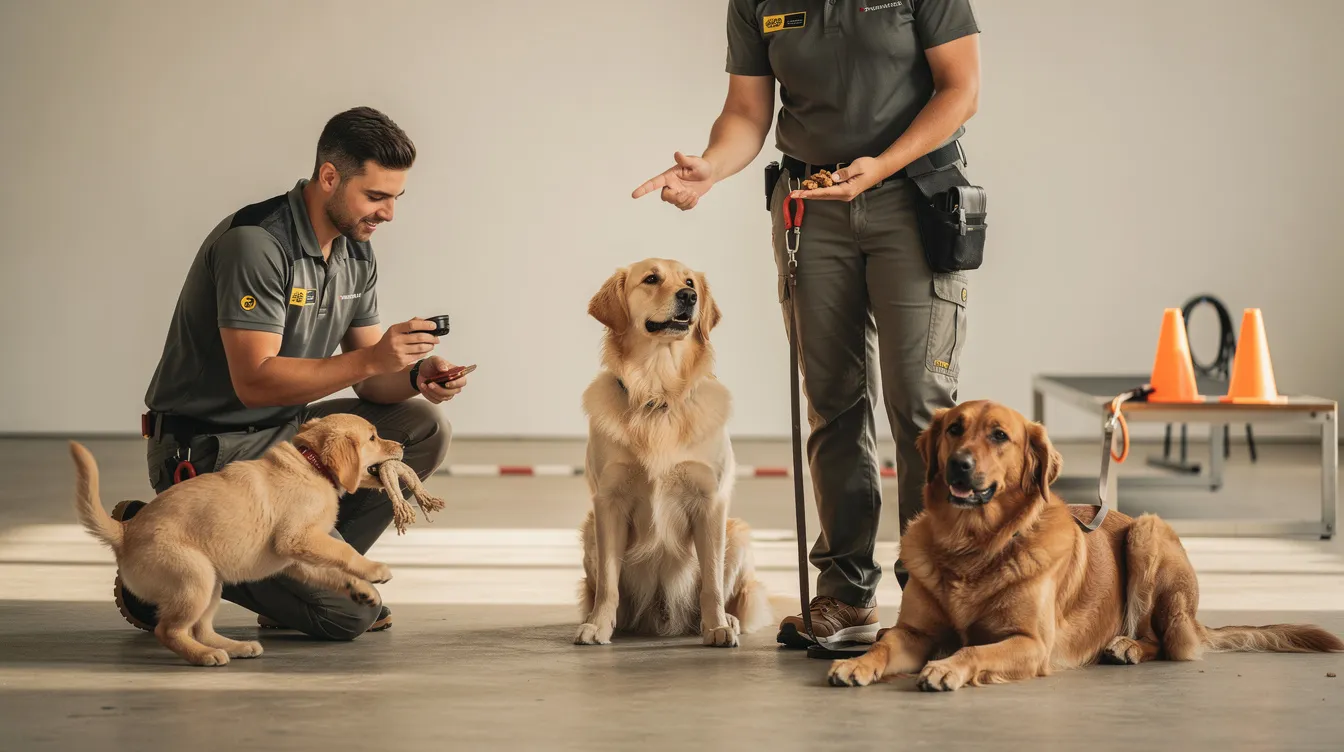
Realistic expectations prevent frustration. Puppies often start showing signs of calming at 9 to 12 months, but puppies may seem more hyperactive during their teenage phase as they test boundaries. The following timeline pairs each developmental stage with practical training approaches.
8-16 Weeks: Foundation Building Phase
This is the window where you set the trajectory for the rest of your dog’s life. Focus on basic routine: feed at the same times, schedule potty breaks, introduce crate training as a safe space for naps. Puppies at this age need 18-20 hours of sleep; overstimulation produces a cranky, bitey puppy, not a tired one.
Age-appropriate physical exercise means about 5 minutes per month of age, twice daily. An 8-week-old puppy gets two 10-minute sessions, not a 45-minute hike. Introduce the puppy’s name, “sit,” and “come” using positive reinforcement. Provide chew toys for teething management. Begin socialization with vaccinated dogs and new environments gradually, keeping experiences positive. A puppy training consultation during this window gives pet parents a structured plan before unwanted behaviors develop.
4-8 Months: Adolescent Energy Management
Puppies peak in energy between 3 and 6 months. This is when many dog owners first wonder whether something is wrong with their pup. Nothing is wrong; the puppy is simply entering the juvenile phase with increased stamina, growing strength, and a brain that wants to test every rule.
Structured play sessions and impulse control training become essential. Games like “leave it,” “wait,” and controlled fetch build the neural pathways for self-regulation. Mental enrichment through puzzle feeders, nosework, and training variety prevents boredom-driven mischievous behavior. Begin leash training with patience; this age group pulls, lunges, and treats everything in the outside world as totally foreign and exciting. Spend time practicing basic obedience commands in progressively distracting environments.
8-24 Months: Maturation and Advanced Training
Between 8 and 24 months, you see the gradual shift from adolescent chaos to adult predictability. Puppies begin developing reliable impulse control. Small breeds may already be showing adult-level calmness by 12-14 months. Larger breeds and high-energy breeds like the Border Collie, Australian Shepherd, and German Shepherds are still mid-development at 18 months.
This period is where obedience training graduates from basics to real-world application. Practice commands around distractions: other dogs at the park, cyclists on the trail, guests at the front door. Build off-leash reliability in secure areas. For dogs that show persistent hyperactivity, continued socialization and structured physical activity remain essential. Physical activity and mental stimulation are essential for a puppy’s development throughout this entire window.
For high-drive breeds or dogs with persistent behavioral challenges, a board-and-train program compresses months of owner-led progress into weeks of intensive professional work.
Training Comparison Table
| Criterion | DIY Training | Private Lessons | Board-and-Train |
|---|---|---|---|
| Timeline to results | 3-12 months of daily practice | 6-12 weeks with weekly sessions | 1-2 weeks intensive |
| Energy management | Depends on owner consistency | Guided by professional trainers | Structured 24/7 during program |
| Owner time commitment | 30-60 min daily | 1 session/week plus daily homework | Minimal during program; maintenance after |
| Best for | Mild energy issues, small breeds | Moderate challenges, owner wants guidance | High-energy breeds, persistent issues, off-leash goals |
| Long-term results | Variable; depends on follow-through | Strong with consistent practice | Strong foundation; requires owner maintenance |
Choosing between these options depends on your breed, the severity of unwanted behaviors, and how much daily training time you can commit. Many pet parents start with private lessons and move to a board-and-train if their high-energy breeds need more intensive impulse control training.
Common Challenges and Professional Solutions
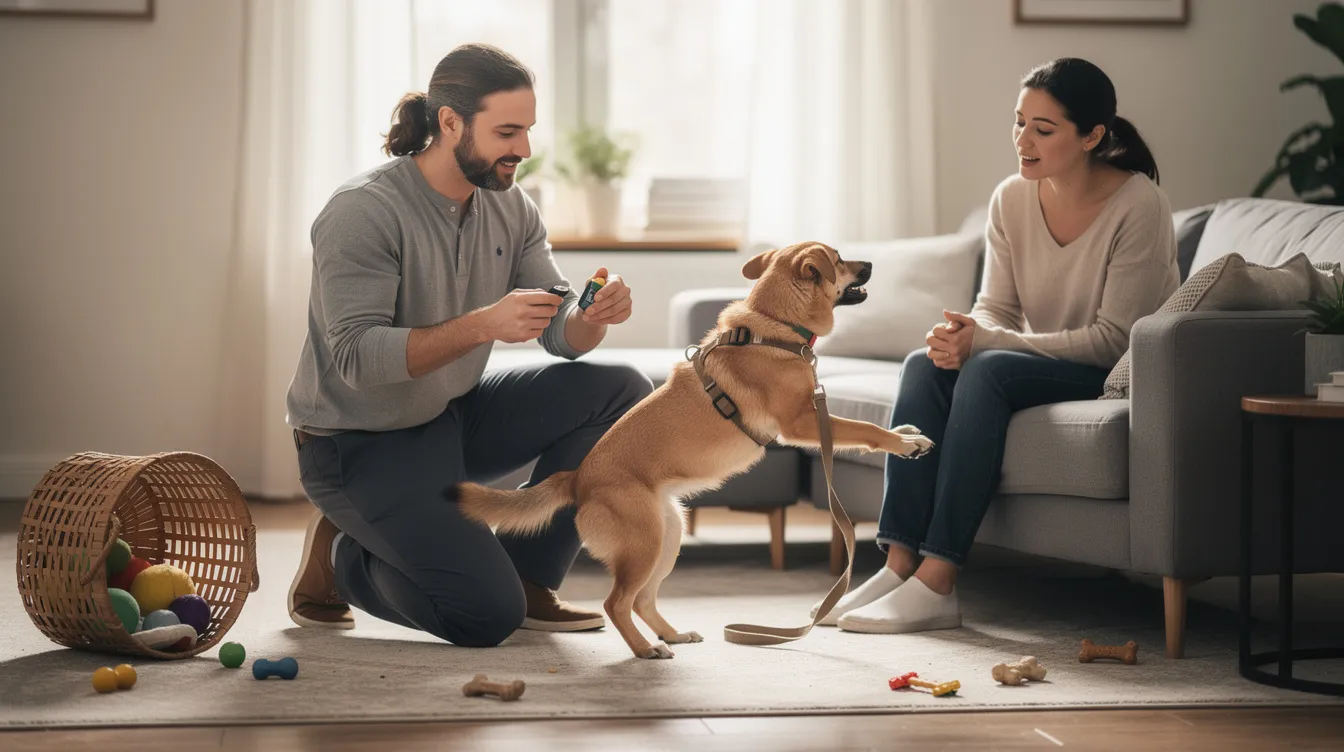
Not every puppy follows the standard timeline. When normal puppy energy persists or escalates past the expected window, it is time to identify whether the issue is developmental, environmental, or behavioral.
Persistent Hyperactivity After 18 Months
If your dog is past 18 months and still shows the same frantic energy as a 6-month-old, evaluate two things: exercise/enrichment adequacy and potential medical causes. A large-breed dog getting 20 minutes of walking per day is under-exercised. A dog getting plenty of physical exercise but no mental stimulation will stay wired. Calming treats can help reduce puppy anxiety in some cases, but they do not replace training.
When exercise and enrichment are appropriate, but the behavior persists, professional trainers can assess whether the dog needs structured behavior modification, including impulse control training tailored to the breed’s energy profile. AAHA guidelines recommend behavioral assessments starting at 6 months, with follow-up annually.
Destructive Behavior and Separation Anxiety
Destructive chewing at 5 months is normal teething behavior, managed with appropriate chew toys and supervision. Destructive chewing at 18 months when left alone often signals separation anxiety or insufficient mental exercise. Distinguishing between the two matters because the solutions differ: energy-driven destruction responds to more exercise and puzzle toys before departures, while anxiety-driven destruction requires graduated alone-time conditioning and sometimes veterinary support.
Crate training, done properly, gives dogs a safe space that reduces anxiety. The crate should never function as punishment. Build positive associations through feeding meals inside, offering high-value chews, and starting with short intervals.
Reactive or Aggressive Energy Display
A puppy lunging and barking at other dogs on leash at 7 months may be frustrated excitement. The same behavior at 2 years is likely leash reactivity with a rehearsed pattern. The subtle signs that separate play energy from fear-based or territorial reactivity include body stiffness, hard stares, raised hackles, and recovery time after the trigger passes.
Dogs that missed early socialization windows often need structured socialization rehab with controlled exposure at sub-threshold distances. Continued socialization through adolescence prevents most reactivity issues from becoming permanent. For dogs already showing reactive patterns, professional behavior modification produces faster and safer results than DIY approaches.
Conclusion and Next Steps
Most dogs calm down between 12 and 24 months. Small breeds often reach adult-level calmness by 12-18 months. Larger breeds and high-energy breeds may take up to two years or longer, with mental and emotional maturity solidifying between 2 to 3 years. Training, socialization, routine, and breed-appropriate exercise all accelerate this timeline. Waiting passively for a hyper puppy to “grow out of it” without intervention extends the chaos.
Take these steps now:
- Identify your dog’s current developmental stage using the age-based timeline above
- Establish a daily routine with consistent feeding, exercise, training, and rest periods
- Add mental enrichment (puzzle feeders, nosework, impulse control games) alongside physical exercise
- Begin or continue obedience training with positive reinforcement, increasing difficulty as the dog matures
- If your pup shows persistent hyperactivity, reactivity, or destructive behavior after 6 months of consistent training, schedule a professional evaluation
Related topics worth exploring include off-leash training readiness, raising a healthy and happy puppy, and advanced obedience for dogs transitioning from the puppy stage to adult life. A senior dog that settles calmly at your feet started as a puppy whose owner invested in structure, training, and patience during those first 24 months.
Additional Resources
- Free phone consultation for Lehigh Valley residents to assess your puppy’s training needs and energy management plan
- Puppy Training Consultation for puppies 8-16 weeks entering the foundation phase
- 10 Day Pawsitive Foundation Puppy Board and Train for adolescent puppies needing intensive impulse control work
- 2 Week Board and Train for high-energy breeds and persistent behavioral challenges
- Dog Obedience Training programs for ongoing development from puppy through adult dog
