
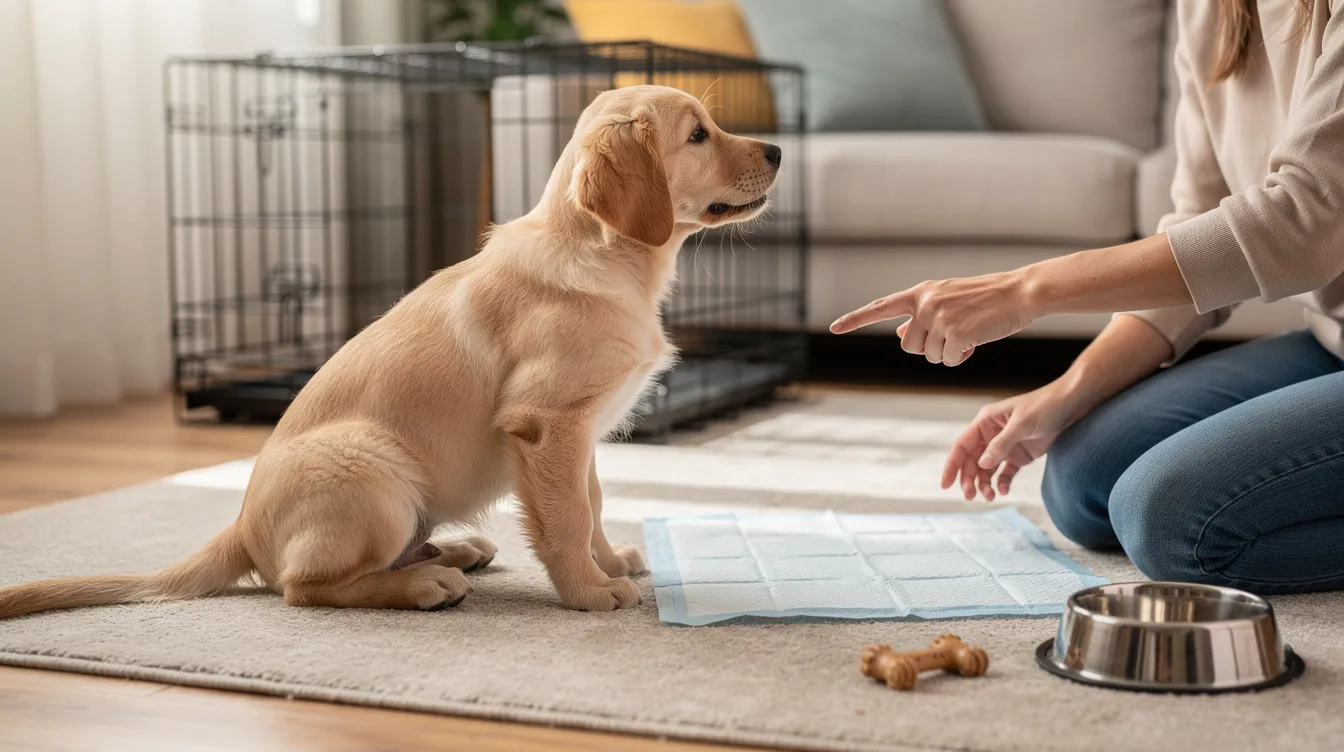
A structured puppy potty training schedule is the single most effective tool for house training a new puppy. Most puppies develop reliable bladder control and consistent outdoor habits within 4 to 6 months when their owners follow a routine matched to the puppy’s age and physical development. Without that structure, puppies are left to their own devices, and accidents inside become a daily frustration for pup parents.
This guide covers age-appropriate scheduling from 8 weeks through 6 months, the biological factors that determine how often your puppy needs to go potty, and how to adjust timing for your individual dog. It does not address behavioral disorders or medical conditions like urinary tract infections; those require veterinary care.
Whether you are a first-time owner bringing home a new pup or an experienced dog owner adding to your household, this complete puppy training schedule gives you the framework to start potty training on day one.
A proper potty training schedule involves taking young puppies outside every 45 to 90 minutes during waking hours, then extending intervals gradually as the puppy’s bladder matures. Puppies can hold it for their age in months plus one hour as a general rule for maximum capacity; active, awake puppies need breaks far more often than that ceiling suggests.
By the end of this guide, you will understand:
- How a puppy’s age determines bladder capacity at each stage
- How to build a personalized daily schedule with daytime and nighttime timing
- How to integrate feeding times for predictable potty trips
- How to troubleshoot common problems like frequent potty accidents and nighttime wake-ups
- How to track progress and measure potty training success over weeks and months
Understanding Puppy Bladder Development
Puppy bladder development is a physical maturation process, not a willpower issue. A puppy’s bladder grows and gains muscular control over months; no amount of training will make an 8-week-old puppy hold it for 5 hours. Schedules that ignore this biological reality produce more accidents, not fewer accidents.
Understanding where your puppy falls on the development curve lets you set realistic intervals and avoid both under-scheduling (leading to accidents) and over-crating (which stresses the puppy and can damage trust in the crate).
Age-Based Bladder Capacity
Bladder control follows a predictable trajectory. At 8 to 10 weeks old, puppies need potty breaks every 45 to 90 minutes when awake and active. During sleep or calm crate time, they may manage 2 to 3 hours, but awake intervals should stay at 30 to 60 minutes.
By 10 to 14 weeks, the window stretches. Awake intervals of 60 to 90 minutes become workable, and calm or sleeping puppies can hold for roughly 3 to 4 hours. VCA Animal Hospitals recommends taking puppies outside every 2 hours at 6 to 8 weeks of age, adding one hour for each additional month.
At 4 to 5 months, most puppies handle 2 to 3 hours between trips during calm waking periods. By 5 to 6 months, daytime intervals of 3 to 4 hours and overnight stretches of 6 to 7 hours become typical.
The common guideline is that puppies can hold their bladder for one hour per month of age. A 3-month-old puppy, then, has a ceiling of about 4 hours under ideal conditions. Treat this as a maximum, not a target. Active play, excitement, or recent water intake can cut that time in half.
Individual Puppy Factors
Not every puppy fits neatly into an age chart. Toy breeds like Chihuahuas and Yorkshires have smaller bladders and often need trips every 30 minutes when active at 8 weeks; a Labrador of the same age may do slightly better during rest but follows the same active-interval rules. Size alone does not determine everything, but it shifts the curve.
Health status also matters. Puppies drinking extra water after vigorous play or during warm Lehigh Valley summers will fill their bladders faster. Spay/neuter timing, hydration levels, and any underlying kidney or urinary issues all affect how frequently a puppy needs to go potty.
Activity level is the factor owners most often underestimate. After intense play or excitement (a visitor arriving, a burst of zoomies), puppies often need to eliminate within 10 to 15 minutes. The “month plus one” rule assumes calm conditions; real life with a puppy rarely stays calm for long.
With these biological limits in mind, the next step is building a daily routine that works within them.
Creating Your Puppy’s Potty Schedule
Knowing your puppy’s bladder capacity gives you the upper boundary. The schedule itself fills in the rest: trigger moments, proactive interval breaks, nighttime adjustments, and feeding coordination. Consistency helps puppies learn when to go potty; inconsistency teaches them nothing except that the rules change daily.
Daytime Schedule Structure
Every potty schedule anchors around trigger moments, the times when puppies almost always need to eliminate. These include:
- Immediately after waking (from overnight sleep or any nap)
- Within 5 to 20 minutes after eating
- After drinking water
- After play sessions or periods of excitement
- After crate time or confinement
- Before bedtime
Between those triggers, schedule proactive potty breaks based on the puppy’s age. For an 8-week-old, set a timer to remind you to take your puppy out every 45 to 60 minutes during awake periods. At 4 months, those intervals can stretch to every 2 to 3 hours during calm activity.
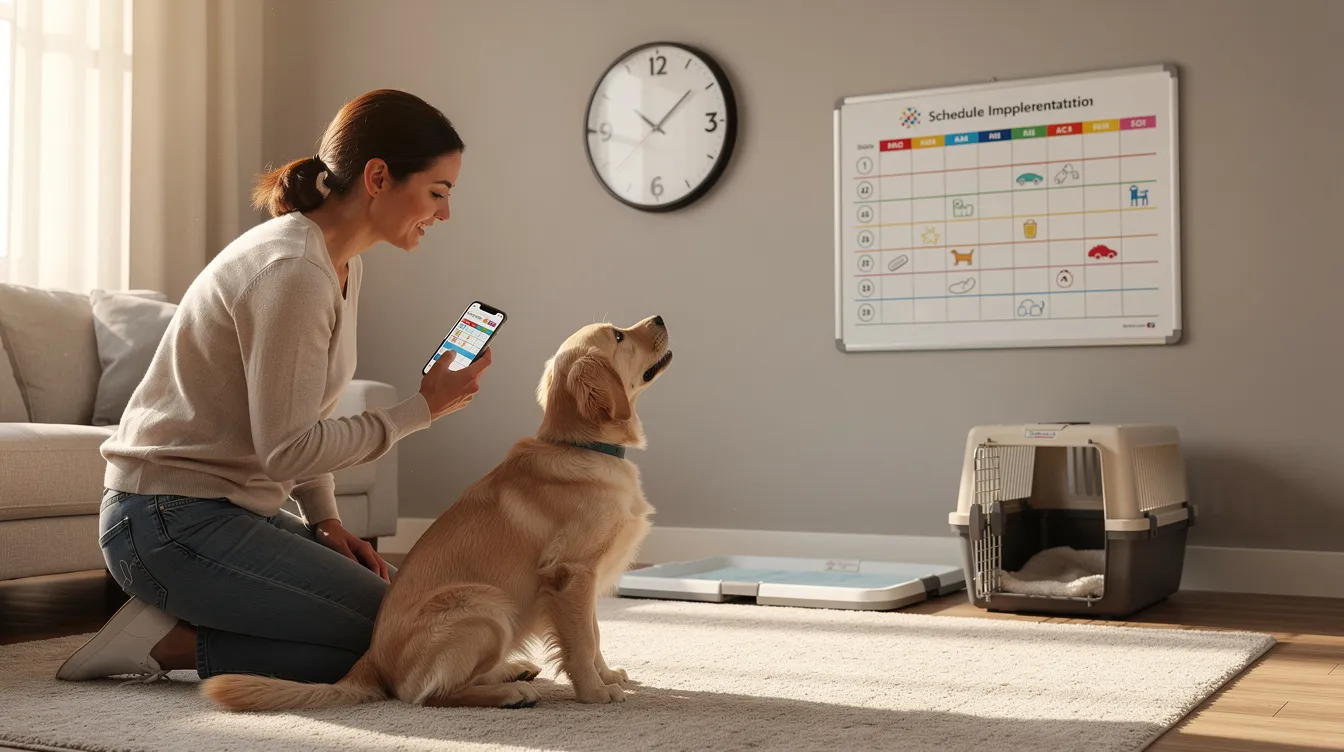
Timers and phone reminders are not optional extras; they prevent the most common cause of accidents inside, which is the caregiver forgetting the interval. Schedule calculator apps like FurCalc can generate age-specific and breed-specific timing, integrating both maximum hold times and post-meal triggers.
Take your puppy to the same spot each time. Using a designated spot outside (ideally accessed through the same door) builds a location association that helps your puppy learn faster. Pair it with a consistent verbal cue like “go potty” so the puppy connects the phrase to the action.
Nighttime Schedule Adjustments
Sleep slows the body’s processes, so nighttime intervals stretch longer than daytime ones. Young puppies at 8 to 12 weeks still need 1 to 2 overnight potty trips, typically around 2 to 4 a.m. Keep these trips quiet and boring; no play, no fuss, just outside and back to the crate.
By about 4 months, many puppies can sleep through the night (6 to 7 hours) without needing a break, provided they had a final potty break just before bed. At 5 to 6 months, most puppies handle a full night reliably.
Limiting water intake 1 to 2 hours before bedtime supports overnight dryness, but never restrict water to the point of dehydration. During hot weather, this balance requires paying attention to how much the puppy drank earlier in the day. Evening meals should happen several hours before bed so digestion and elimination finish before sleep begins.
If your puppy is crying in the crate at night, distinguish between a genuine need to potty and attention-seeking. A puppy that circles, whines, and sniffs is likely telling you it needs to go out.
Feeding Time Integration
Meals trigger the gastrocolic reflex, a wave of gut movement that pushes food through the digestive tract and often results in a bowel movement within 5 to 20 minutes of eating. Feeding at consistent times (for example, breakfast at 7 a.m., lunch at noon, dinner at 5 p.m.) makes elimination timing predictable.
The number of daily meals changes as the puppy grows. At 8 to 10 weeks, puppies eat 3 to 4 meals per day. By 3 to 4 months, this drops to 3 meals. By 5 to 6 months, 2 meals per day is standard for most breeds. Each meal change shifts the potty schedule, so track potty habits to create a better schedule whenever feeding frequency changes.
Water access follows a similar logic: frequent small drinks throughout the day, a larger drink after play, and reduced intake before bed. Always allow water after meals, but expect a potty trip shortly after.
With feeding, daytime breaks, and nighttime timing established, the next section maps these principles into concrete daily protocols and age-based comparisons.
Schedule Implementation and Management
A schedule only works if it becomes a daily routine executed consistently. This section translates the principles above into step-by-step protocols and a comparison table that shows how timing shifts as your puppy grows.
Daily Schedule Protocol
Use this structured approach from the first day your new puppy comes home:
- Morning wake-up: Carry or walk the puppy directly to the potty spot the moment it wakes. Do not stop for food, greetings, or anything else; young puppies have seconds, not minutes, before they need to go.
- Breakfast at a fixed time: Feed the meal, then take the puppy outside 10 to 20 minutes afterward. Wait at the appropriate spot until the puppy eliminates, then reward within 5 to 10 seconds with food rewards or high-value treats and verbal praise.
- Throughout the day: Alternate between activity (play, puppy training, socialization) and rest or crate time. After every nap, every play session, and every crate time period, go directly outside. Between these triggers, set a timer for age-appropriate intervals.
- Evening routine: Feed dinner at a regular hour. Allow a post-meal potty trip and a final water offering. Keep evening play low-key. Execute a final potty break just before crate or bed. Overnight, only take the puppy out if it signals a genuine need.
Positive reinforcement encourages puppies to repeat desired behaviors. Reward puppies within 5 to 10 seconds of desired behavior; delayed rewards do not connect to the action. Use the same cues and praise for consistent training results every time. A chew toy or short play session can also serve as a reward, but immediate food rewards build the association fastest during the beginning stages.
Schedule Comparison by Age
This table summarizes the data across the developmental stages. Use it to find your puppy’s age and set appropriate intervals:
| Puppy’s Age | Awake Interval Between Trips | Max Hold (Sleep/Calm) | Approximate Daily Potty Trips | Overnight Breaks |
|---|---|---|---|---|
| 8-10 weeks | 45-60 minutes | 2-3 hours | 10-14 | 1-2 |
| 11-16 weeks | 60-90 minutes | 3-4 hours | 8-10 | 0-1 |
| 4-5 months | 2-3 hours | 4-5 hours | 5-8 | Usually 0 |
| 6+ months | 3-4 hours | 5-7 hours | 4-6 | 0 (full night) |
At 8 to 10 weeks, expect to spend a large portion of the day managing potty trips. Puppies 8-10 weeks need potty breaks every 45-90 minutes. As the puppy grows, the number of daily trips drops and longer periods between breaks become possible. By 6 months, most puppies are approaching adult dog reliability during daytime hours.
The “awake interval” column is the one to set your timer by. The “max hold” column applies only to sleep and calm crate time. Puppies 12+ weeks can hold it for 2 hours during the day, but only during calm periods; after play or water, take them out sooner.
Frequent outdoor potty opportunities reduce indoor accidents. That principle holds at every age.
Common Schedule Challenges and Solutions
Even with a well-built schedule, setbacks happen. Accidents happen. The goal is not perfection; it is steady improvement week over week.
Frequent Accidents Despite Following the Schedule
Accidents often occur within 10 minutes of coming inside. If your puppy eliminates outdoors but then has an accident shortly after returning, the puppy likely was not finished outside. Stay at the potty spot longer (5 to 10 minutes) and reward only after elimination, not just for going outside.
If accidents inside are happening between scheduled breaks, the intervals are too long. Shorten them by 15 to 30 minutes. Monitor your puppy closely to prevent indoor accidents; when you cannot watch the puppy directly, use crate time or a puppy-proofed confinement area. Leaving a puppy to its own devices in an open room is the fastest path to missed signals.
Use enzymatic cleaners to eliminate odors from accidents. Standard household cleaners leave scent traces detectable by the puppy’s nose, which encourages repeat elimination at the same spot. Potty pads and puppy pads can serve as a backup for apartment dwellers, but they can slow the transition to outdoor-only training. If you use them, place them near the same door you will eventually use for outdoor trips and phase them out as bladder control improves.
Excessive Nighttime Wake-ups
If your puppy wakes multiple times overnight despite being old enough to hold longer, check three things: Is the final potty break happening late enough? Is water being offered too close to bedtime? Is the puppy getting enough exercise and mental stimulation during the day to sleep deeply?
Gradually extend nighttime intervals by 15 to 30 minutes per week. If the puppy makes it through without accidents, the new interval holds. If accidents return, step back to the previous timing for another week. Potty training success does not happen overnight; it builds incrementally.
Schedule Disruptions from Work or Lifestyle Changes
A new work schedule, a family event, or seasonal changes in routine can throw off your puppy’s schedule. Puppies thrive on predictability; when the daily schedule shifts, adjust feeding and potty times together.
If midday breaks become impossible due to work hours, arrange for a dog walker, a neighbor, or doggy daycare to cover the gap. At Off Leash K9 Training of Lehigh Valley, board-and-train programs can help bridge gaps during particularly chaotic transitions and build a solid foundation of good behavior that carries into your regular schedule.
Track your puppy’s accidents and successes in a simple log. Patterns emerge: maybe the 2 p.m. break is consistently too late, or post-dinner trips need to happen 5 minutes earlier. Data removes guesswork and lets you stay consistent even when routines shift.
Conclusion and Next Steps
Successful puppy potty training matches the puppy’s developmental stage to a consistent schedule of potty breaks, trigger-based trips, and gradual interval extensions. There is no shortcut; the process takes 4 to 6 months for most puppies, with steady improvement along the way.
To start today:
- Determine your puppy’s age and set awake intervals using the table above
- Set phone timers for every scheduled break; do not rely on memory
- Feed meals at fixed times and take the puppy to the designated spot within 10 to 20 minutes after eating
- Reward every outdoor potty success with high-value treats within seconds
- Log accidents and successes to adjust timing weekly
Beyond potty training, integrating crate training and positive reinforcement techniques into your daily routine builds good manners and social skills that carry into obedience training and a well-behaved adult dog. Teaching basic commands alongside house training gives your puppy a sense of structure that supports potty success and overall confidence.
For puppy owners dealing with chewing problems or socialization questions, addressing those early prevents them from becoming larger issues later.
Additional Resources
- Free puppy training consultation with Off Leash K9 Training of Lehigh Valley to assess your puppy’s specific needs and build a personalized training schedule
- FurCalc’s online puppy potty training schedule calculator generates breed-specific and age-specific timing recommendations
- Use a simple spreadsheet or notes app to track daily potty trips, accident times, and meal schedules; patterns become visible within 5 to 7 days of logging
